
The Shailendra Dynasty: Progenitor of Mahayana Buddhism in Indonesia

A painting of Borobudur, the temple complex built by the Shailendras. It is now a world-famous tourist and pilgrimage location, and a designated UNESCO World Heritage Site.
Shailendra (also spelled Sailendra, Syailendra or Selendra) is a derivative of the combined Sanskrit words of ‘Śaila’ and ‘Indra’ meaning “King of the Mountain”. The Shailendra Dynasty, which arose in Java (Indonesia) during the 8th Century, was strongly influenced by Indian culture and played a significant role in the cultural revival of the region. As a strong propagator of Mahayana Buddhism, the Shailendras built Buddhist monuments across Central Java. One of the monuments, the massive stupa of Borobudur, has been declared a UNESCO World Heritage Site and is one of Java’s most popular sites for both pilgrims and tourists today.

The Indonesian archipelago in Southeast Asia, here highlighted in beige, consists of over 17,000 islands. Two of the larger ones are Java and Sumatra. At various points in history, the Shailendra Dynasty was the ruling family of the Medang Kingdom of Central Java and the Srivijaya Kingdom in Sumatra. Click to enlarge.
The Shailendras were seafarers who ruled across the seas of Southeast Asia. Though they were a maritime empire, this Dynasty was also a cultivator of agriculture, heavily dependent on rice farming on the Kedu Plain. The Kedu Plain, also known as the Progo River Valley, lies between Mount Sumbing and Mount Sundoro to the west, and Mount Merbabu and Mount Merapi to the east. In the present day, these would be in the Magelang and Temanggung Regency of Central Java, Indonesia.

The Kedu Plain marked out on a map of Java Island, as it would have appeared during the time of the Medang Kingdom (8th to 11th Century). Click to enlarge.
At various points in history, this thalassocratic dynasty appears to have been the ruling family of both the Medang Kingdom of Central Java and the Srivijaya Kingdom in Sumatra. Key players in the history of the Shailendras include:
- Dapunta Selendra, the founder of the Shailendra Dynasty
- Sri Sanjaya (disputed; some say he is a member of the Sanjaya Dynasty instead)
- Rakai Panangkaran, the Buddhist (reigned 760 – 775 CE)
- Dharanindra, the slayer of courageous enemies (reigned 775 – 800 CE)
- Samaratungga, the uniter of kingdoms (reigned 812 – 833 CE)
- Pramodhawardhani and Rakai Pikatan (reigned 840s – 856 CE)
- Balaputradewa, the Nalanda sponsor (reigned 860 – ? CE)
- Sri Kesari Warmadewa, the descendant of the Shailendra Dynasty who became the ruler in Bali (reigned 882 – 914 CE)
- Maharaja Sanggrama Vijayatunggavarman, the last king
This list is by no means exhaustive, nor is it finalised because much of the information about the Shailendra Dynasty is subject to debate by scholars and historians. Historians have attempted to reconstruct a definitive list of the Shailendra rulers and their domain, but they have not been able to reach a consensus. Challenges they have faced include:
- A lack of information. Information gleaned from inscriptions has often been very limited and difficult to decipher.
- The Shailendras appear to have ruled many kingdoms such as Kalingga, Medang and Srivijaya, and oftentimes the kingdoms and places overlapped.
- The spellings of names and places also vary widely, due to differences in language, the use of epithets, political influx and changes, the fact that these events took place so long ago, etc.
Nevertheless, having an approximate list to refer to is useful when trying to understand the Shailendras’ vast history and impact on the region and Buddhism.
- Historical Sources
- Origins
- Merging powers
- Post-Balaputradewa era
- Main kingdoms
- Significant rulers
- Temples
- Artefacts
- Gallery
Historical sources

Abhayagiri stone inscription (dated 792 CE). Click to enlarge.
Most of the historical information on the Shailendra Dynasty may be gleaned from stone inscriptions found in Indonesia, the Malay peninsula and as far away as India, where there are historical mentions of the Shailendras spelled in different variations. An inscription is writing that has been carved into something made of stone or metal; one famous example that many will be familiar with is the Rosetta Stone.
Inscriptions that document the history of the Shailendras are mainly charters written in various languages such as Sanskrit, Old Javanese, Old Balinese, Old Malay and even in Old Sundanese. These inscriptions provide the basis for the chronological documentation of Indonesian history. Some inscriptions are copies written a few centuries after the date of the originals, mostly during the Majapahit period. Although the originals are lost, the copies are generally considered to carry the historical accuracy of the originals.
Apart from the inscriptions on stone and copper, there are also texts composed on palm leaves (known as lontar) which have been found in Java, Bali and Sunda. These texts are mostly histories written in the style of classical literature.

A palm leaf text manuscript (lontar) from Indonesia.
Other sources about the Shailendra Dynasty come from Chinese, Muslim, and Indian texts. From China, the Shailendras are referred to in the Imperial Annals (Pen Chi), which are the Imperial Court’s detailed records of gifts or tributes received by the Emperor of China from various foreign emissaries. The Chinese Court’s officials recorded the names of foreign kings or heirs and/or the envoys, the gifts received, and the dates received.
Another source of information from China are the Dynastic Histories where Notices (Chuan) written in dedication to respective countries were recorded. The Pen Chi and Chuan are often independent of each other and thus provide greater recorded accuracy on the events that took place. The Chinese records play an important role in recording the history of Indonesia, especially for the period before the 8th Century when most historical information about Java and Bali can trace their origins to these Chinese records.
In contrast to the Chinese who recorded events, the Muslim records (mostly in Persian and Arabic) were often written by travellers and geographers who took more interest in the nature of the land rather than the events documented. As such, these records provide a different perspective on the lands of ancient Indonesia.
From India, copper inscriptions provide important information on Java and Sumatra from the 9th to the 11th Centuries. Early documents, written in Sanskrit and Pali, also exist from as far back as the beginning of the Christian Era; these mention parts of the Indonesian archipelago, indicating that India knew of them well.

The Greek geographer Claudius Ptolemy (c. 100 – 170 CE). Click to enlarge.
Some documents from Cambodia and Vietnam provide little but important information about ancient Indonesia and finally, some Greek sources, such as those from the geographer Claudius Ptolemy (also known as Claudius Ptolemaeus; c. 100 – 170 CE), also mention a few names of places in Indonesia.
Aside from the above foreign information sources, there are still many historical inscriptions and documents that have not yet been deciphered and translated, such as the stone inscriptions found in Sumatra which remain partially translated. There is no doubt that the richness of Indonesian history would unravel further if more historians and the Indonesian government were to play a greater role in their translations.
The Shailendra Dynasty represents a grand era in Indonesian history, when their seafarer ways conquered much of the Indonesian archipelago and expanded trade and bilateral relations to India, China, and Southeast Asia. In his foresight, King Sri Sanjaya requested for his heir Rakai Panangkaran’s (also known as Rakai Panaraban) conversion into Mahayana Buddhism, which had a lasting effect that spanned the period of the Shailendra Dynasty’s rule and beyond. During this period, the Shailendra Dynasty established many holy and historical sites, such as the Borobudur Temple complex, along with producing many religious artefacts.
The stone inscriptions
According to recovered stone inscriptions from Sumatra, the Shailendra Dynasty may have ruled the Medang Kingdom of Central Java, as well as the Srivijaya Kingdom in Sumatra. The Shailendras created stone inscriptions using three languages: Old Javanese, Old Malay and Sanskrit, in either the Kawi alphabet or pre-Nāgarī script.
This use of different languages has generated speculation of the Shailendras’ possible origins. The use of Old Javanese seems to establish them politically in Java, whereas their use of Old Malay seems to place them with Sumatran origin; meanwhile, their use of Sanskrit strongly indicates the official and/or religious nature of the events described on the inscription stones.

Sojomerto inscription (dated 725 CE). Click to enlarge.
The Sojomerto inscription (c. 725 CE) found in the Batang Regency of Central Java had the names ‘Dapunta Selendra’ and ‘Selendranamah’ inscribed. The name ‘Selendra’, a different spelling of ‘Shailendra’, suggests that Dapunta Selendra could be the founder of the Shailendras in Central Java. The inscription suggests that the family were originally Hindu Shaivites, a dominant school in the Hindu tradition that worships Shiva as their main deity. This practice took place before their conversion to Mahayana Buddhism.
The Kalasan inscription (c. 778 CE) is the earliest dated inscription found in Central Java. With the mention of Shailendras as ‘Śailēndravamśatilaka’, we learn of Rakai Panangkaran, the ruler who commemorated the inauguration of Candi Kalasan (or Kalasan Temple), a Buddhist temple dedicated to the Goddess Tara.
The Kelurak inscription (c. 782 CE) and the later Karangtengah inscription (c. 824 CE) also mention the name ‘Śailēndravamśatilaka’.
The Ligor inscription (also known as the Chaiya inscription; c. 775 CE), which was found on the Malay peninsula, and the Nalanda inscription (c. 860 CE), which was found in India, carry within them the inscribed name ‘Shailendra’. Their contents indicate the possibility of Rakai Panangkaran as the creator of the Ligor inscription and the conqueror of the Srivijaya Kingdom, which was based in Sumatra but influenced most of Southeast Asia.
The (possible) origins of the Shailendra Dynasty
The (possible) origins of the Shailendra Dynasty

The Kedu Plain of Central Java
The true origins of the Shailendras is the subject of debate, although it is known that their rise took place in the Kedu Plain of Central Java. There have been suggestions of their originating from Sumatra, India or even Cambodia. However, recent studies support the likelihood of the Shailendra Dynasty originating in Java, despite their strong connections with the Thai-Malay peninsula and the Srivijaya Kingdom in Sumatra.
India
That the Shailendras originally came from Kalingga in Eastern India was first claimed by Dr Ramesh Chandra Majumdar, an Indian scholar who wrote the 11-volume The History and Culture of the Indian People, covering the Vedic Period up to 1955. He composed this after 26 years of studies, research and edits.

The Indian historian Dr Ramesh Chandra Majumdar
Dr Majumdar’s claim was shared by Nilakanta Sastri, a highly acclaimed historian on South India, and J.L. Moens, a Dutch self-taught expert on the iconography of Hindu-Java historical artefacts. Moens described how the Shailendras originated in India and settled in Palembang, Indonesia. Later, with the arrival of Dapunta Hyang Sri Jayanasa of Srivijaya in 683 CE, the Shailendras were forced by Dapunta Hyang and his army to migrate to Java.
Cambodia
Another theory, proposed by French scholar George Cœdès, claims a connection between the Shailendras to the Funan Kingdom in Cambodia, believing the connection to lie within the similarities in their names.
The name ‘Shailendra’ is a derivative of the Sanskrit words ‘Śaila’ and ‘Indra’. When combined, the name means ‘King of the Mountain’. According to Cœdès, Funanese rulers were referred to with the similar title ‘Mountain Lord’. However, many Cambodian specialists dismiss this theory, as there is no historical evidence of any such titles in use in the Funan period.
Java, Indonesia
Another contending theory places the Shailendras as a native Javanese dynasty, with the Sanjaya Dynasty as a branch of the Shailendras. This stems from the notion that King Sri Sanjaya and his children belonged to the family of Shailendra, who were originally the Shaivite rulers in the Medang Kingdom. Through the conversion of his heir Rakai Panangkaran to Mahayana Buddhism, the Shailendras became associated with Buddhism.

The 16th Century manuscript Carita Parahyangan
Written in the Carita Parahyangan, a 16th Century manuscript, is the story of an old sickly King Sri Sanjaya who fell to public sentiment over their preference for the peace-loving Buddhism, rather than the feared Shiva worshipped by the royal family. King Sri Sanjaya ordered his son to convert to the Buddhist faith. The Raja Sankhara inscription also apparently described Panangkaran’s conversion to Buddhism due to his people’s fear of his faith in Shiva. Unfortunately however, the Raja Sankhara inscription has gone missing so this cannot be confirmed.
Srivijaya Kingdom (Sumatra, Indonesia)
Some scholars claim that the Buddhist kingdom of Srivijaya was involved in the rise of the Shailendra Dynasty. These claims emphasise the connection in their shared Mahayana patronage and intermarriages between the Shailendras and Srivijayans, as written in the Ligor stone inscription. Some inscriptions, written in Old Malay, further reinforce the claimed connections with Srivijaya.
Furthermore, the Sojomerto inscription (725 CE) refers to the founder of the Shailendra Dynasty as Dapunta Selendra, positioning him as an ancestor of the Shailendras. Given that the Sojomerto inscription is written in Old Malay (although found in the north coast of Central Java), the fact that the Shailendras are of Sumatran origin or connected to the Srivijaya Kingdom is a possibility since both the Srivijayan King, Dapunta Hyang Sri Jayanasa, and Dapunta Selendra are referred to by the same honorific epithet ‘Dapunta’, a title used by the earlier Srivijaya kings.
Merging powers
Mutual alliances between the Shailendras and the Srivijayans were forged and maintained through peaceful means, including marriages like that between the Shailendra King Samaratungga and Dewi Tara, the daughter of the Srivijayan King Dharmasetu. With this beneficial alliance, the two kingdoms eliminated rivalries and promoted access to trade that spread internationally.

An artist’s illustration of Pramodhawardhani. Click to enlarge.
The union of King Samaratungga and Princess Dewi Tara is supposed to have borne two offspring – a daughter, Pramodhawardhani (or Sri/Cri Kahulunan) and a son, the heir Balaputradewa.
It appears that like many of her ancestors, Pramodhawardhani was deeply spiritual. It is documented in the 824 CE Karangtengah inscription that Pramodhawardhani established the holy Jinalaya Temple. Incidentally, the inscription also mentions the establishment of another holy Buddhist building, Venuvana (meaning ‘Bamboo Forest’), by King Dharanindra to contain his cremated remains.
Furthermore, in the Tri Tepusan inscription, which is dated to 842 CE, it tells of Pramodhawardhani freeing the local residents of land tax so that their additional disposable income could be put towards the maintenance of Bhumisambhara (better known as Borobudur).
Pramodhawardhani married Rakai Pikatan of the Sanjaya Dynasty, who would later be responsible for ending her brother Balaputradewa’s rule in Central Java. It was in 852 CE that a civil war was waged between the two men, after Balaputradewa learned that Rakai Pikatan was rallying the local nobles against him. The civil war ended in Balaputradewa’s defeat and he was forced to return to the Srivijaya Kingdom in Sumatra, where he assumed the role as their supreme leader.

A painting by G.B. Hooijer (c. 1916 – 1919) of Borobudur as it would have appeared in its heyday. Click to enlarge.
This period of Shailendra history, as well as their ancestry, is contested. Some historians believe that Samaratungga was the son and heir of King Samaragrawira while other historians like N.J. Krom and George Cœdès regarded Samaragrawira and Samaratungga as the same.
A later historian, the Indonesian Slamet Muljana, disagreed with this. He theorised that Samaragrawira actually had two sons – Samaratungga, the elder and Balaputradewa, the younger. His claims are supported by:
- The Malang inscription, which states that Samaratungga had just one daughter (and no son)
- The Nalanda inscription, which records Balaputradewa as the son of Samaragrawira i.e. the brother, and not the son, of Samaratungga
Thus, according to Mr. Muljana, Balaputradewa was not the son of Samaratungga but in fact his younger brother. If this were true, then it would give Balaputradewa a greater claim to the Javanese ruling seat; had Samaratungga died without a son and legitimate heir, his younger brother should have assumed the throne upon his death, not his daughter.
Hence positioning Balaputradewa as a brother, and not a son, challenges the legitimacy of Pramodhawardhani and her husband Rakai Pikatan’s rule.
The post-Balaputradewa era

Belanjong Pillar (dated 914 CE). Click to enlarge.
After the end of Balaputradewa’s reign, there arose another Shailendra king, Sri Kesari Warmadewa, who was the first king of Bali to leave a written inscription. He authored it on the Belanjong Pillar in Sanur, Bali and it states that he was a member of the Shailendra Dynasty who led a military expedition to Bali to establish a Mahayana Buddhist government.
Thus, like the Shailendras who came before him, Sri Kesari was a Buddhist king. Sri Kesari is considered the founder of the Warmadewa Dynasty. Hence the Belanjong Pillar, which has been dated to 914 CE, draws a connection between the Warmadewa Dynasty with the Shailendras.
The Shailendras also maintained relations with the Chola Kingdom in Southern India, as documented in many South Indian inscriptions. An 11th Century inscription mentions the Buddhist temple in India built by the King of Srivijaya in 1005 CE, who granted revenues for its upkeep. In 1025 CE, however, the relationship between the two dynasties broke down.
Emperor Rajendra Chola invaded the Shailendra Empire, based in Srivijaya, conquering some of the Shailendras’ ruling territories and devastating those in their path. Maharaja Sanggrama Vijayatunggavarman, the last king of the Shailendras, was captured and taken hostage. Now leaderless, the Shailendras never truly recovered from this massive destruction, effectively ending this ruling dynasty in Sumatra.
The Chola Kingdom and the Shailendras were able to restore more peaceful relations before the end of the 11th Century. In 1090 CE, a new charter was granted to Srivijaya, marking the last known inscription with a reference to the Shailendras. However, lacking a true legitimate Shailendra heir, other royalty from Srivijaya ascended the throne, beginning with the Maharaja Sri Deva who was enthroned and, with that, began a new dynasty to rule Srivijaya.

The bas relief in Borobudur depicting a palace scene of the King and Queen accompanied by their subjects, based on the Shailendran royal court.
Timeline of events related to the Shailendra Dynasty
The following are important milestones and events related to the Shailendra Dynasty, which may lend some clarity into this great family’s activities and legacy:
- 674 CE – Dapunta Selendra, the founder of Shailendra Dynasty is said to have been born.
- 683 CE – Dapunta Hyang Sri Jayanasa arrives in the Srivijaya Kingdom.
- 8th Century – The Medang Kingdom, also known as the Mataram Kingdom, is initially established by King Sri Sanjaya of the Sanjaya Dynasty.
- 775 CE – Rakai Panangkaran abdicates his throne to find spiritual peace and concentrate on religious matters.
- 775-800 CE – During the reign of King Dharanindra, the Shailendra Dynasty expands their trade policy to the Srivijaya Kingdom. In addition, King Dharanindra is known to wage successful wars. During the pinnacle of the Medang Kingdom’s glory, their influence reaches present-day Bali, Sumatra, Cambodia and the Philippines.
- 792 CE – Samaratungga assumes the throne of the Srivijaya Kingdom.
- c. 852 CE – the peaceful coexistence between the Shailendra and Sanjaya Dynasties ends with a civil war, as Rakai Pikatan and Balaputradewa, the son of King Samaratungga, fight each other. Balaputradewa is defeated and forced to leave Java, taking up residence in Sumatra in the Srivijaya Kingdom where he becomes the supreme ruler.
- 860 CE – The Nalanda inscription is created and it describes how the King of the Pala Empire, Devapaladeva, grants permission to Sri Maharaja of (also known as Balaputradewa) to build a monastery in the Nalanda area.
- 1005 CE – An 11th Century inscription mentions the Buddhist temple in India built by the King of Srivijaya, who is also granted revenues for its upkeep.
- 1025 CE – The relationship between the Chola Kingdom and the Shailendras, based in Srivijaya, breaks down. Emperor Rajendra Chola invades and conquers some of the Shailendras’ territories. The last king of the Shailendras, Maharaja Sanggrama Vijayatunggavarman, is taken hostage. The Chola Kingdom and the Shailendras are able to restore more peaceful relations before the end of the 11th Century but left leaderless, the Shailendra Dynasty is unable to truly recover.
Main kingdoms related to the Shailendra Dynasty
Spanning the 8th and 9th Centuries, the rule of the Shailendra Dynasty is generally believed to have been limited to Central Java from the time of Rakai Panangkaran to King Samaratungga. Recently-uncovered inscriptions however, indicate the possibility of a longer rule.
Beginning in the 7th Century with references of sovereignty in the Sojomerto inscription, to the early 11th Century when the Shailendra Dynasty was defeated by Emperor Rajendra Chola, it would appear that at various points in history, the Shailendras ruled both the Medang and Srivijaya Kingdoms. These kingdoms correspond with modern-day Java and Sumatra, respectively. The allegiance and intermarriage with the Srivijayan ruling family had, over time, merged the two dynastic families, leading to the Shailendras to rule both ancient kingdoms at different times.
Professor Boechari, an Indonesian historian and epigrapher, previously attempted to list the early beginnings of the Shailendra Dynasty based on the Sojomerto inscription, while historians like Slamet Muljana and Professor Poerbatjaraka focused on the middle and later periods. Other historians linked the Shailendras to the Sanjaya and Srivijaya Dynasties based on the inscriptions and the Carita Parahyangan manuscript.
Medang Kingdom

A map of the Medang Kingdom, which was located on the Java Island of Indonesia. Click to enlarge.
The Medang Kingdom, also known as the Mataram Kingdom, was initially established by King Sri Sanjaya of the Sanjaya Dynasty in the 8th Century. The Canggal inscription (732 CE), which was written in the Pallava alphabet, records the construction of a lingam (a symbol of Shiva) as per the instruction of the king. Historians believe this indicates Medang was originally a Hindu kingdom.
The Canggal inscription also states that King Sri Sanjaya was the son of King Sanna’s sister. King Sanna, the previous ruler of Java, died in battle. The kingdom fell into a state of disarray until King Sri Sanjaya took over, founded the Medang Kingdom, defeated the local rulers and restored harmony on Java Island. He is said to have had many admirable qualities, including mastery of military tactics, knowledge of the holy scriptures, and being proficient in martial arts.
After King Sri Sanjaya’s passing, Rakai Panangkaran succeeded him. It is generally believed that he was either King Sri Sanjaya’s son or nephew, and King Sri Sanjaya requested for his heir’s conversion to Mahayana Buddhism.
The influence of the Shailendra Dynasty grew at a significant pace due to their successful trade policy. Initially, the Medang Kingdom relied heavily on rice farming and other agricultural activities, but they later ventured into maritime trade. During the reign of King Dharanindra (reigned 775 – 800 CE), the Shailendra Dynasty expanded their trade policy to the Srivijaya Kingdom. In addition, King Dharanindra was known to wage successful wars. During the pinnacle of the Medang Kingdom’s glory, their influence reached present-day Bali, Sumatra, Cambodia and the Philippines.
Archaeological findings revealed that the Medang Kingdom was prosperous, well-populated and sophisticated for its time. By the late 8th Century, the kingdom had developed distinctive Javanese architecture and art, which can be seen today in the now world-famous Borobudur, Sewu, Kalasan and Prambanan Temples.
The Shailendras were known to be very politically astute. For example, the Shailendra ruler Samaratungga married Dewi Tara, the daughter of the Srivijayan King Dharmasetu, thus forging a mutually beneficial relationship between the two kingdoms. For King Dharmasetu, the newly-developed alliance meant that the Medang Kingdom’s rapid expansion would be less of a threat for them. At the same time, for King Samaratungga, the marriage meant that the Shailendra Dynasty had access to Srivijaya’s strategic international trade position.

The beautiful Prambanan Hindu Temple
Nevertheless, after King Sri Sanjaya’s passing, the influence of the Sanjaya Dynasty had still waned until King Samaratungga of the Shailendra Dynasty arranged a political marriage between his daughter, Pramodhawardhani and Rakai Pikatan, the Sanjaya Dynasty prince. During Rakai Pikatan and Pramodhawardhani’s reign, Hinduism dominated the Medang Kingdom once again.
In the mid-9th Century, the peaceful coexistence between the Shailendra and Sanjaya Dynasties ended with a civil war, as Rakai Pikatan and Balaputradewa, the son of King Samaratungga, fought each other in 852 CE. Unfortunately Balaputradewa, who also happened to be Rakai Pikatan’s brother-in-law, was defeated and had to retreat to the homeland of his mother, the Srivijaya Kingdom, to become a ruler there.
This event, and Rakai Pikatan’s rise to power, marks the start of the Sanjaya Dynasty’s rule of the Medang Kingdom. During their reign, the Sanjaya rulers built many Hindu temples, including the Prambanan Temple, which is considered the largest Hindu temple in Southeast Asia.
Srivijaya Kingdom

The Srivijaya Kingdom was a Buddhist kingdom that dominated a substantial part of the Malay-Indonesian archipelago from 650 to 1377 CE. It was regarded as such an important centre for the expansion of Buddhism that even the illustrious Buddhist master Atisha went to Srivijaya to study with Suvarṇadvipa Dharmakīrti.
What we know about the Srivijaya Kingdom is mostly from stone inscriptions written in an ancient Malay language, primarily the Kedukan Bukit, Talang Tuwo, Telaga Batu and Kota Kapur inscriptions. According to these inscriptions, the city of Palembang in Sumatra was most likely the centre of the Srivijaya Kingdom. This is evident from a rectangular enclosure encircled by a moat, forming a settlement or temple known as Venuvana (meaning ‘Bamboo Forest’) which was mentioned in the 824 CE Karangtengah inscription.

An artist’s illustration of the ruler Dapunta Hyang Sri Jayanasa
The inscriptions also tell the story of a war chief named Dapunta Hyang Sri Jayanasa who waged war against his rivals and gathered support from neighbouring cities along the Musi River. Eventually, this led to the formation of the Srivijaya Kingdom. Dapunta Hyang became the founder and the first king of the Srivijaya Kingdom. The Srivijaya Kingdom spread Buddhism, establishing the religion in the places they conquered like Java and the Malayan region.
The bilateral relationship between the Srivijaya and Medang Kingdoms further solidified through the marriage of Dewi Tara, the daughter of Srivijaya’s King Dharmasetu to King Samaratungga of Medang. Samaratungga would later assume the Srivijaya throne in 792 CE. According to some inscriptions, his union with Dewi Tara bore him a daughter, Pramodhawardhani and a son, Balaputradewa.
The Srivijaya Kingdom enjoyed prosperity due to its strategic location for maritime trading. Their ports provided a link between China, Southeast Asia and India. In addition, its proximity to the Musi River estuary allowed for abundant farming in the fertile local soil. The Chinese often referred to the Srivijaya Kingdom as Jinzhou, or the “Gold Coast”, because of the great reserve of gold found in the kingdom.
VIDEO: Reenactment of Life in the Srivijaya Empire
Or view the video on the server at:
https://video.tsemtulku.com/videos/SriwijyaEmpire-4.mp4

The Srivijaya Kingdom was also famous as a centre for the practice of Vajrayana Buddhism. According to the Talang Tuwo inscription (684 CE), the Srivijaya king was a religious ruler who associated himself with the power of a Bodhisattva. Srivijaya itself did not leave many Buddhist archaeological artefacts but it became well-known as a centre of Buddhist learning for scholars and monks, especially in the city of Palembang.
The evidence of the Srivijaya Kingdom’s existence can be traced to the 7th Century. A Tang Dynasty monk, I-tsing, wrote that he visited the Srivijaya Kingdom in 671 CE for six months to learn Sanskrit grammar and the Malay language. From there he continued his journey to study Buddhism at the renowned university of Nalanda, Bihar, in what is now India. Upon finishing his 11 years’ worth of learning at the university, he returned to the Srivijaya Kingdom on his way back to China.

I-tsing stayed in Palembang for two years to translate various original Sanskrit Buddhist scriptures into Chinese. He then travelled to China in 689 CE in order to get some paper and ink because he could not find them in Srivijaya, and he returned in the same year. In 695 CE, he brought back approximately 400 translated texts of Buddhist teachings to China. He also wrote two travel diaries titled A Record of Buddhist Practices Sent Home from the Southern Sea and Buddhist Monk’s Pilgrimage of the Tang Dynasty, to sum up his 25 year-long adventure in the Srivijaya Kingdom and India.
“… Many kings and chieftains in the islands of the Southern Ocean admire and believe in [Buddhism], and their hearts are set on accumulating good actions. In the fortified city of Bhoga [Palembang, the Srivijaya’s capital] Buddhist priests numbered more than 1,000, whose minds are bent on learning and good practices. They investigate and study all the subjects that exist just as in the Middle Kingdom [Madhya-desa, India]; the rules and ceremonies are not at all different. If a Chinese priest wishes to go to the West in order to hear (lectures) and read [the original scriptures], he had better stay here for one or two years and practice the proper rules and then proceed to Central India.”
Source: I-tsing’s A Record of Buddhist Practices Sent Home from the Southern Sea, also known as the Nanhai Jigui Neifa Zhuan
The Srivijaya Kingdom produced many notable Buddhist scholars, including Suvarṇadvipa Dharmakīrti, an illustrious 10th Century Buddhist master of lojong and bodhicitta. He is renowned as the teacher of Atisha Dipamkara Shrijñana, who studied under Suvarṇadvipa’s guidance for 12 years.

Map of the Srivijaya Empire
The decline of the Srivijaya Kingdom began in 1025 CE after King Rajendra Chola of the Tamil Nadu in South India launched a series of raids on the Srivijaya Kingdom. He intended to pillage the kingdom’s great wealth. King Rajendra’s continuous attacks greatly weakened Srivijaya’s dominance, eventually resulting in the formation of smaller regional kingdoms such as Kediri, which focused their economies on agriculture instead of coastal trading. The weakened Srivijaya Kingdom was finally defeated by the predominantly Hindu Majapahit Kingdom.
VIDEO: Why Did the Cholas Invade the Srivijaya Empire?
Or view the video on the server at:
https://video.tsemtulku.com/videos/WhyDidTheCholasInvadeTheSrivijayaEmpire.mp4
Significant rulers of the Shailendra Dynasty
Dapunta Selendra, the founder
According to the Sojomerto inscription, the Shailendra Dynasty began with Dapunta Selendra, who established himself and his family in Batang Regency, Central Java. Dapunta Selendra is said to have been born in 674 CE.

Batang Regency, Central Java
Dapunta Selendra was described as a Shaivite Hindu. It is generally accepted that later members of the Shailendra Dynasty converted to Mahayana Buddhism. The similarity of title between Dapunta Selendra and Dapunta Hyang Sri Jayanasa has led historians to believe that they were either related, or the same person because ‘Dapunta’ was a title used by the earlier Srivijaya kings.
There were some sources which claim that the first known Shailendran king was named Bhanu, including the historian John Villiers who mentioned in his book:
“… when the first known Sailendra king [Bhanu] appeared.”
Source: J. Villiers, Sudostasien von der Kolonialzeit P. 96
The claim about King Bhanu is based on the Hampran inscription. However, Professor Boechari, an Indonesian epigrapher and archaeologist, believed that the claim of Bhanu being the first Shailendra king was not convincing because in the inscription, Bhanu did not use the title of ‘Maharaja’ like the other Shailendra kings.
Rakai Panangkaran, the Buddhist
(reigned 760 – 775 CE)
After King Sri Sanjaya’s passing, the Kalasan inscription states that he was succeeded by Rakai Panangkaran who is also known as Rakai Panabaran or Maharaja Dyah Pancapana Kariyana Panamkarana. Unlike his predecessor, Rakai Panangkaran had a great affinity for Buddhism. He was known as the king who built Kalasan Temple, a temple dedicated to the Buddha Tara.

King Rakai Panangkaran built Kalasan Temple, a Buddhist temple dedicated to the Buddha Tara. A Buddhist king, it was said that Rakai Panangkaran abdicated his throne in order to pursue spirituality.
During his reign, Rakai Panangkaran built many temples in addition to Kalasan Temple, like Sari Temple and Lumbung Temple. He is also believed to have initiated the construction of Sewu Temple and Abhayagiri Vihara.

Ratu Boko site where the Abhayagiri inscription was found. Click to enlarge.
An Abhayagiri inscription dated 792 CE mentions that Rakai Panangkaran abdicated his throne to find spiritual peace and concentrate on religious matters. Rakai Panangkaran passed away prior to the completion of Sewu Temple.
Several historians have developed theories to explain how the Shaivite King Sri Sanjaya was succeeded by a Buddhist king, Rakai Panangkaran.
Theory #1
by Van Naerssen, Bosch and Cœdès
Supported by the historians Van Naerssen, F.D.K. Bosch and George Cœdès, this theory claims that Rakai Panangkaran was King Sri Sanjaya’s son. However, during his reign, the Sanjaya Dynasty was defeated by the Shailendra Dynasty, and Rakai Panangkaran had to build Kalasan Temple under the instruction of a Shailendra ruler, King Dharanindra.
Theory #2
by Professor Poerbatjaraka, Pusponegoro and Notosutanto
The historians Prof. Poerbatjaraka, Marwati Pusponegoro, and Nugroho Notosutanto supported the second theory, which asserts that the Sanjaya Dynasty never existed. They believed that both King Sri Sanjaya and King Rakai Panangkaran were from the Shailendra Dynasty, and the Sanjaya Dynasty did not exist. Under this theory, King Sri Sanjaya requested his son Rahyang Panaraban to convert to Buddhism. Rahyang Panaraban, they believe, is the same person as Rakai Panangkaran. This story is based on Carita Parahyangan, a 16th Century manuscript.
Theory #3
by Slamet Muljana
Historian Slamet Muljana disagreed with the first theory that Rakai Panangkaran was the son of King Sri Sanjaya who was defeated by the Shailendra King Dharanindra. According to Mr. Muljana, Rakai Panangkaran could not have been Dharanindra’s subordinate or inferior because he was praised as ‘Sailendrawangsatilaka’ (the gem of Shailendra Dynasty) in the Kalasan inscription.
Slamet Muljana posits a third theory, which supports the claim that Rakai Panangkaran was not King Sri Sanjaya’s son but a Buddhist Shailendra king of his own right. His conclusion was based on the Mantyasih inscription that states Rakai Panangkaran assumed the title of ‘Sri Maharaja’, the title used by the Shailendra kings. According to this theory, Rakai Panangkaran was a Buddhist Shailendra king who defeated the Sanjaya Dynasty and ascended to the throne of the Medang Kingdom.
Dharanindra, the slayer of courageous enemies
(reigned 775 – 800 CE)

An artist’s illustration of King Dharanindra
King Dharanindra, also known as King Indra, was the ruler of the Medang Kingdom and beyond. He was a talented strategist who ran successful military campaigns. During his reign, he managed to expand his kingdom to include the Malay Peninsula and Indochina. He was well-respected by his people and enemies alike.
According to the Kelurak inscription, King Indra was also known as Wairiwarawiramardana or “The Slayer of Courageous Enemies”. An inscription found in Southern Thailand also mentions him, wherein he is referred to as Sarwwarimadawimathana. The inscription describes King Dharanindra as an emanation of the Hindu god Vishnu.
King Dharanindra successfully conquered Ligor and Southern Cambodia in the Mekong Delta. He also launched a raid on Champa in what is now Southern Vietnam.

Sewu Temple, also known as Manjushrigrha (the House of Manjushri)
Following the legacy of his predecessor Rakai Panangkaran, King Dharanindra was also known as a great builder. He was the Shailendra king who built Sewu Temple, which is also known as Manjushrigrha (the House of Manjushri). The Karangtengah inscription, dated 824 CE, mentions that King Dharanindra was also responsible for the construction of Venuvana, and the planning of the Borobudur and Pawon Temples. These days, the Sewu and Borobudur Temples are the second largest and the largest Buddhist temples in Indonesia, respectively.
King Dharanindra’s role in the construction of Sewu Temple is described in the Kelurak inscription dated 782 CE. The Kelurak inscription is written in Sanskrit with Pranagari script. The inscription was found in Lumbung Temple, Kelurak Village in Central Java. Presently, the inscription is secured in the National Museum of Indonesia, under the inventory number D.44.
Samaratungga, the uniter of kingdoms
(reigned 812 – 833 CE)
Samaratungga was the descendant of King Dharanindra, and he was mentioned in the Karangtengah inscription dated 824 CE. During his lifetime, Samaratungga brought the relationship between Medang and Srivijaya Kingdoms closer by marrying Dewi Tara, the daughter of the Srivijaya ruler King Dharmasetu. Samaratungga later became the supreme ruler of the Srivijaya and Medang Kingdoms.

The magnificent Borobudur Temple was completed during the reign of the Shailendra King Samaratungga.
During Samaratungga’s reign, he witnessed the completion of the magnificent Buddhist temple, Borobudur. However, Samaratungga also lost the area that had been conquered by his predecessor, King Dharanindra. He appointed Jayavarman II as Indrapura’s governor in the Mekong Delta. Unfortunately, Jayavarman II cancelled the alliance and betrayed Samaratungga’s trust. He conquered the Mekong Delta area and established the Khmer Empire.
Samaratungga and Dewi Tara had two famous children, his son Balaputradewa and daughter Pramodhawardhani who married Rakai Pikatan, a member of the Sanjaya Dynasty.
The Building of Borobudur Temple
Additional information on the Karangtengah inscription

The Karangtengah inscription (c. 824 CE). Click to enlarge.
The Karangtengah inscription consists of five pieces of stones dated 824 CE. The stone inscription was found in Karangtengah Hamlet in Temanggung Regency, Central Java. The Karangtengah inscription was written in two languages: Old Javanese and Sanskrit.
The Karangtengah inscription mentions King Samaratungga and his daughter, Pramodhawardhani, who established a sacred building called Jinalaya. The inscription also mentions another Buddhist building named Venuvana which means ‘Bamboo Forest’ in Sanskrit, and it is where the ashes of the ‘King of the Cloud’ were interred. It is possible that the King of the Cloud may refer to King Dharanindra. Some historians have identified Jinalaya as Borobudur, while Venuvana was either Mendut or Ngawen Temple.
The Karangtengah inscription also describes a king named ‘Rakai Patapan pu Palar’ who decreed in his royal edict the rice fields in Kayumwungan to be tax-free in 824 CE. Rakai Patapan pu Palar refers to Rakai Garung. While the historian Slamet Muljana suggests that Rakai Garung is another name for Samaratungga, others have posited that Rakai Garung might be the regent who forced his tutorship on Samaratungga’s son, Balaputradewa who ascended the throne as a boy after his father died.
Pramodhawardhani, Rakai Pikatan and Balaputradewa
The peace of the Medang Kingdom under Shailendran rule would soon be thrown into a state of chaos due to a civil war after Samaratungga passed away. On one side was his daughter Pramodhawardhani and her husband Rakai Pikatan; on the other side was his son Balaputradewa.

Plaosan Temple was built by the Hindu Rakai Pikatan, a devotee of Shiva, for his Buddhist wife Pramodhawardhani, a princess of the Shailendra Dynasty.
Pramodhawardhani had married Rakai Pikatan, a Hindu prince of the Sanjaya Dynasty. After her father’s passing, her brother Balaputradewa became the rightful ruler of both the Medang and Srivijaya Kingdoms. However, Balaputradewa became involved in a conflict with Rakai Pikatan, and it grew into a civil war. Rakai Pikatan defeated Balaputradewa and usurped the throne of the Medang Kingdom. Balaputradewa had to retreat to the Srivijaya Kingdom where he became the ruler.
After Balaputradewa’s defeat, Rakai Pikatan and Pramodhawardhani actively built both Hindu and Buddhist temples within close proximity to each other. The Hindu Prambanan Temple, the Buddhist Plaosan Temple and the Buddhist Sajiwan Temple were all constructed during this era, which suggests that during their reign, Hindu and Buddhist faiths were in harmony.
Pramodhawardhani and Rakai Pikatan
(reigned 840s – 856 CE)
Pramodhawardhani was the daughter of Samaratungga. She was also variously known as Sri/Cri Sanjiwana, Sri/Cri Kahulunan and Nini Haji Rakryan Sanjiwana. Pramodhawardhani was mentioned in several stone inscriptions such as Karangtengah, Tri Tepusan and Rukam. She was famous for her beauty and it is said that the image of the goddess Durga at Prambanan Temple was made in her likeness.

Rakai Pikatan (click to enlarge)
A very spiritual person, Pramodhawardhani provided tax-free land to fund and maintain Bhumisambhara (Borobudur Temple), according to the Tri Tepusan inscription dated 842 CE. The Rukam inscription dated 907 CE, mentions Rukam Village, which was previously destroyed by a volcanic eruption. The village was later restored and Pramodhawardhani inaugurated the newly-rehabilitated settlement. The Rukam inscription also mentions that the residents of Rukam Village had the obligation to maintain a sacred building in Limwung. This sacred building has been identified as the present-day Sojiwan Temple.
Pramodhawardhani’s betrothal to a Shaivite Sanjaya Prince, Rakai Pikatan, was viewed as the political reconciliation between the Hindu Sanjaya Dynasty and the Buddhist Shailendra Dynasty. This interfaith alliance was recorded in the Shivargrha inscription. The Shivargrha inscription, also spelled as Shivargha, has been dated to 856 CE, after the end of Rakai Pikatan’s reign. Today, the Shivargrha inscription is preserved in the National Museum of Indonesia, Jakarta with identification number D.28.
The Shivargrha inscription also mentions that in contrast with his Buddhist queen consort Pramodhawardhani, King Rakai Pikatan himself was a Hindu who worshipped Shiva. Nevertheless, he would go on to construct Plaosan Temple in dedication to his Buddhist wife.
In the Shivargrha inscription, it describes the House of Shiva (Shivargrha), which refers to Prambanan Temple, as well as a modification project of the Opak River near Prambanan. This inscription also refers to the battle of royal succession in the Medang Kingdom between Balaputradewa and Rakai Pikatan.
Balaputradewa, the Nalanda sponsor
(reigned 860 – ? CE)

An artist’s illustration of King Balaputradewa
According to some sources, Balaputradewa was the younger son and heir of King Samaratungga and his wife Dewi Tara. Other sources say that Balaputradewa was actually the younger brother of King Samaratungga, and not his son. The former theory is more popular, making Balaputradewa a Shailendra prince descended from an illustrious line of royalty of the Medang Kingdom (on his father’s side) and the Srivijaya Kingdom (on his mother’s).
Balaputradewa’s father, King Samaratungga, died when he was just a boy. As a young heir to the throne, Balaputradewa’s authority in Central Java was frequently challenged by the local nobles; he was even forced to accept the tutorship of a man called Rakai Garung, a member of the Sanjaya Dynasty who became related to Balaputradewa via the marriage of his son, Rakai Pikatan to Pramodhawardhani, Balaputradewa’s sister. Until Rakai Garung’s regency ended in 832 CE when he disappeared, King Balaputradewa’s reign in Central Java remained relatively peaceful.
Eventually however, the Shailendras’ existence in Java came to an end. Historical accounts predating the 824 CE Karangtengah inscription suggest that the Shailendra Dynasty co-existed peacefully with the Sanjaya Dynasty until the mid-9th Century. It was around 852 CE when Balaputradewa’s brother-in-law Rakai Pikatan began rallying the support of the local nobles, worrying Balaputradewa who tried to suppress him. His efforts however, failed miserably due to his inexperience and eventually, Rakai Pikatan defeated his brother-in-law.
Java thus fell into the hands of the Sanjaya Dynasty, which went on to establish the Medang Kingdom that remained until the 11th Century, when the Srivijaya Dynasty reasserted their dominance over Java. Until then however, the Shailendras’ existence in Java effectively ended with Balaputradewa’s defeat, which is recorded in the Shivargrha inscription. They were forced to leave Java for Sumatra, which was the seat of the Srivijaya Dynasty and the home of Balaputradewa’s mother, Dewi Tara. There, Balaputradewa became the supreme ruler of the Srivijaya Kingdom.

The Nalanda inscription (c. 860 CE) found in India.
Until 860 CE, the Shailendras did not appear nor did any of the Javanese inscriptions mention them. It was only in 860 CE that their name re-emerges, this time in India and in the Nalanda inscription. The Nalanda inscription was found in the antechamber of Monastery 1 at Nalanda Monastery complex in 1921. In this inscription engraved on a copper plate, Balaputradewa is recorded as the King of Suvarṇadvipa (modern-day Sumatra). It records an endowment from the Shailendra King Balaputradewa who, “attracted by the manifold excellences of Nalanda”, had built a monastery there.
It states that Balaputradewa sent an ambassador to Devapaladeva, the King of Bengala, asking him to grant the revenue of five villages for the construction and upkeep of the monastery. Devapaladeva, a staunch sponsor of Buddhism, granted his request. In fact, it is said that Devapaladeva also sanctioned the construction of many temples and monasteries in Magadha, maintained the monastery at Uddandapura (Odantapuri) and patronised Vikramshila University. The inscription reads:
“We being requested by the illustrious Maharaja Balaputradeva, the king of Suwarnadvipa through a messenger I have caused to be built a monastery at Nalanda granted by this edict toward the income for the blessed Lord Buddha, the abode of all the leading virtues like the Prajnaparamita, for the offerings, oblations, shelter, garments, alms, beds, the requisites of the sick like medicines, etc. of the assembly of the venerable bhiksus of the four quarters (comprising) the Boddhisattvas well versed in the tantras, and the eight great holy personages (i.e. the aryapuggalas) for writing the dharma-ratnas of Buddhist texts and for the up-keep and repair of the monastery (when) damaged.
There was a king of Yavabhumi (Yava or Java), who was the ornament of the Sailendra Dynasty, whose lotus feet bloomed by lustre of the jewels in the row of trembling diadems on the heads of all the princes, and whose name was conformable to the illustrious tormentor of brave foes (vira-vairi-mathana). His fame, incarnate as it were by setting its foot on the regions of (white) palaces, in white water lilies, in lotus plants, conches, moon, jasmine and snow and being incessantly sung in all the quarters, pervaded the whole universe. At the time when the king frowned in anger, the fortunes of the enemies also broke down simultaneously with their hearts.”
Temples related to the Shailendra Dynasty
The Shailendra Dynasty were prolific temple builders and great propagators of the Buddhist faith. During their reign, they built many Buddhist temples, many of which exist to this day.
Architecture style
The Shailendra Dynasty created a remarkable series of monuments, including one of the largest temples of all time, the world-famous Borobudur Temple. From the perforated miniature stupas of Borobudur to the twin temples of Plaosan, sculptures by the Shailendra Dynasty adopted their own Central Javanese forms and style although they were originally derived from Indian art.

Borobudur, a world-famous example of architecture from the Shailendra Dynasty
The majority of temple complexes and large structures in Central Java are Buddhist and the Shailendras were responsible for many monuments there, such as Mendut, Pawon, Kalasan, Sewu and many more.
On the basis of stylistic analysis, it is said that there are two periods of Buddhist temple-building during the time of the Shailendra Dynasty. The first one was during the time of Rakai Panangkaran, and another at a later period during the time of King Samaratungga.
During the earlier period, temples that were built were Borobudur, Kalasan, Lumbung, Mendut, Pawon, Sari and Sewu, while Plaosan and Ngawen were built during the later period.
As illustrated in The Buddhist temples of the Śailendra Dynasty in Central Java by Marijke I. Klokke, there are some distinct differences between the architecture of both periods. For example, the monster heads of the earlier period do not have a lower jaw and downward-facing paws. The earlier period saw the building of large Buddhist structures and small Hindu temples in peripheral areas while in the later period, larger Hindu temples were built with a more uniform style in terms of ornamentation over a large area.

(Top) The monster head of the earlier period
(Bottom) The monster head of later period
In the earlier period, the outline of the antefixes (vertical blocks that terminate the covering tiles of a tiled roof) is irregular and they follow the ornament on the outward-facing surface. By contrast, antefixes of the later period have a clear-cut outline. Band ornaments of the earlier period are a repetition of geometric forms while those of the later period appear in the form of four-petalled flowers, alongside geometric forms. Foliate motifs, such as the six-leafed foliate or a foliate scroll were also included.
Studies of Central Javanese ornamentation show that the style and design are very much localised, although the designs were of Indian origin. One similarity is the band ornament, for example, those consisting of alternating squares and circles, found at Banyunibo Temple which are similar to those on a votive stupa at Bodhgaya.
Cultural exchanges, especially contact with Sri Lanka and trade goods that entered Indonesia during the Tang period, also influenced the art of Central Java during the Shailendra period. For example, a Chinese silk, scaled to size, is depicted on the main building of the Sewu Temple complex. There were also Chinese-looking sages at Sewu and Merak.
The three temples of Mendut, Pawon and Borobudur
According to Professor Lokesh Chandra, the Shailendras built temples such as Mendut and Borobudur to “fully sanction and stabilise the cakravartin sovereignty of the Sailendras”. A series of three temples – Mendut, Pawon and Borobudur – are said to be interconnected. Located on a straight line from north to south, these three temples show similar sculpture designs on the temple bodies.

The three temples of Mendut, Pawon and Borobudur are located in a straight line. Click to enlarge.
Prof. Chandra stated that Mendut and Pawon are related to the class of carya-tantras. Their construction corresponds to information within the Indonesian tantric text, Sang Hyan Kamahayanan Mantranaya, which has verses derived from the Mahavairocana-sutra and Adhyardha-satika Prajnaparamita. The Mahavairocana-sutra is also referred as Garbhadhatu mandala in the Sino-Japanese tradition, and the main deity of this tantra is Abhisambhodi Vairochana (Japanese: Garbhadhatu Vairochana).
When referring to Mendut Temple, King Dharanindra was said to have used the technical term of carya-tantras, Tathagata-kula. The Tathagata-kula has two components, the Mahavairocan-abhisambodhi-tantra and the Acala-kalpa, and these two show the connection between the Mendut and Pawon Temples.

Every year, thousands of Buddhists walk from Mendut Temple to Borobudur Temple, passing through Pawon Temple as part of a Wesak Day procession commemorating Buddha Shakyamuni’s birth, enlightenment and passing. Click to enlarge.
The Mendut Temple is related to the Mahavairocan-abhisambodhi-tantra, while the Pawon Temple is related to the Acala-kalpa. Hence, Pawon is closer to Mendut as both temples are said to be related, while Borobudur that belongs to the yoga-tantras is further away. The distance between Pawon and Mendut is 1,150 metres, while the distance between Pawon and Borobudur is 1,750 metres – one and a half times the distance between Pawon and Mendut.
In the Tibetan tradition, the Mahavairocana-tantra is immediately followed by the Acala-kalpa in the Kangyur. As the Tibetan Kangyur is laid out systematically, with its sequence determined by interdependence based on doctrinal, ritual and philosophical development, the placement of Mahavairocana-sutra and Acala-kalpa within the Kangyur is not by chance. Rather, it is to indicate the close and integral relationship between them.
Hence, the closer distance between Pawon and Mendut, as well as the further distance between Pawon and Borobudur is an indication that these temples were planned according to the scriptural norms of the carya-tantras and yoga-tantras.
In the contemporary era, during the full moon in May or June, Buddhists in Indonesia observe an annual Wesak ritual by walking from Mendut, passing through Pawon, and ending at Borobudur.
Candi Mendut
Location
Mendut Temple is found in Mendut Village of the Mungkid sub-district in Magelang, Central Java. It is three kilometres away from the Borobudur Temple. According to De Casparis (1950), Mendut is “one complex whole with Pawon and Borobudur” and the oldest of the three temples.

Candi Mendut (click to enlarge)
History
Mendut was built by a king of Shailendra Dynasty, identified as either Samaratungga or Dharanindra. Its exact origins are unclear; some say that based on the Karangtengah inscription dated 824 CE, it was Samaratungga who built Mendut, while other historians ascribe it to Dharanindra.
Architecture
Mendut is rectangular and 26.4 metres tall. It is on a two-metre high platform and there are 31 panels of relief surrounding it, with a water channel to drain water from the walkway.
Inside the Mendut Temple, there are the “Five Tathagatas” of Vajrayana Buddhism, with Buddha Vairochana as the main deity, flanked by Avalokiteshvara and Vajrapani. The other four Buddha statues are no longer there, leaving behind four empty niches.
On the walls outside, eight bodhisattvas are at the corners, with Prajnaparamita on the right wall, Akasagarbha on the left wall, and Lokeshvara on the back wall.


Candi Pawon
Location
Pawon Temple is located in Borobudur Village in Magelang, Central Java on a straight line that runs between Mendut and Borobudur. Also known as Bajranalan Temple, Pawon Temple is two kilometres to the northeast of Borobudur Temple, and one kilometre to the south-east of Mendut Temple.

Candi Pawon (click to enlarge)
History
Pawon means ‘kitchen’ in the Javanese language, which is derived from the root word ‘awu’ (meaning ‘dust’). Pawon, from the word ‘Per-awu-an’ (“place that contains dust”) can also mean a temple that houses the dust of a cremated king.
Pawon’s other name, Bajranalan, is derived from the Sanskrit words ‘vajra’ (meaning ‘thunder’ or referring to a Buddhist ceremonial tool) and ‘anala’ (meaning ‘fire’ or ‘flame’). In Bali, texts have been found describing Vajranala who is said to be seated in flames, pure as the autumnal moon, with three eyes and four arms holding a staff, in the abhyada mudra, carrying a rosary and vase.
That fire is a part of Pawon’s alternative name corresponds with the actual Pawon building where small windows were constructed to disperse the smoke for a consecrated fire ceremony called ‘homa’ (or ‘goma’). The homa ritual originates from Vedic rituals, but it evokes Buddhist deities and is performed by Buddhist priests.
The main deity invoked in some homa traditions, such as those in Japan, is Acalanatha (Fudo Myoo 不動明王). In the Japanese Mudras of the Four Rites for the homa (fire consecration) ceremony, the four rites are:
- The preliminary ceremony of 18 steps
- Vajradhatu
- Garbhadhatu
- Homa or Fudo (Acala)
Acala in Japan is always portrayed by his flames and emblems, which corresponds to him being the Vajra-jval-anal-arka (Vajranala).
In Chu Fo Pú-sa Sheng Hsiang Tsan, ascribed to Changkya Rolpai Dorje, Jvalanala (Tibetan: me-ltha-hbar-ba) is considered a manifestation of Acala. Hence, Pawon Temple must have been a homa temple with Acala as the presiding deity.
Architecture
Pawon Temple was erected on a rectangular platform that rises 1.5 metres from the ground. There is a 20-cornered platform at the edge of the base surface while the platform sides are decorated with sculptures depicting flowers and clinging vines. Some observers have noted that Pawon Temple resembles a Hindu temple more than other Buddhist temples, especially since the body of Pawon Temple is slim.


Candi Borobudur
Location
Borobudur is the world’s largest Buddhist temple and is located in the town of Muntilan, Central Java. Around 42 kilometres northwest of Yogyakarta, this temple complex is built between two twin volcanoes, Sundoro-Sumbing and Merbabu-Merapi, and two rivers, the Progo and the Elo.

Candi Borobudur (click to enlarge)
History
Said to have taken 75 years to build and completed during the time of King Samaratungga, Borobudur was later mysteriously abandoned due to the shifting of focus to the East, as well as Javanese conversion to Islam. The discovery of the complex is credited to Sir Thomas Stamford Raffles in 1814. Raffles, in turn, referred to Hermann Cornelius, the Dutch engineer he sent to excavate the site. To reveal the monument, Cornelius and his 200 men cut down trees, burned down vegetation and dug away the earth.
The whole complex was fully unearthed in 1835 and since then numerous restoration and preservation works have been carried out, including those funded by the Dutch East Indies government, as well as the Indonesian government and UNESCO. This temple complex was listed as a UNESCO World Heritage Site in 1991.
This holy site was mentioned in two inscriptions. According to the Karangtengah inscription dated 824 CE, it is said to be Jinalaya, “the realm of those who have conquered worldly desires and reached enlightenment”, inaugurated by Pramodhawardhani, the daughter of King Samaratungga. It is also identified as Bhūmi Sambhāra Bhudhāra, “the mountain of combined virtues of the ten stages of Bodhisattvahood”, in the Tri Tepusan inscription dated 842 CE.
Architecture
Borobudur is an architectural marvel. The architect Gunadharma, who “…bears the measuring rod, knows division and thinks himself composed of parts”, was said to have climbed Mount Menoreh and instructed his builders to align the construction to the ‘true north’ star. The relief of a ship on the east of Borobudur shows a sailed double outrigger canoe underneath celestial objects; in ancient times, Indonesians were said to have crossed oceans based solely on the position of the stars.

It took around 55,000 cubic metres of andesite stones that were cut to size, transported to the site and laid without mortar to build this monument. It has a drainage system with 100 spouts at each corner in the shape of a giant or makara.
The Borobudur complex is a combination of stupas (Buddhist hemispherical structures built to house relics), a temple mountain and a tantric Buddhist mandala, which is a spiritual and ritual symbol representing the universe, Buddhist cosmology and the nature of mind. It has one of the largest and most complete ensembles of Buddhist reliefs in the world, with 2,672 relief panels and 504 Buddha statues. 72 Buddha statues seated inside a perforated stupa surround the central dome.
The foundation measures approximately 118 metres on each side, with nine platforms. The path starts with the base of the monument, ascending to the top through three levels or realms in Buddhist cosmology:
- Kāmadhātu (the world of desire) represented by the base
- Rupadhatu (the world of forms) represented by the five square platforms, and
- Arupadhatu (the world of formlessness) represented by the three plain circular platforms.
Pilgrims have to pass stairways and corridors with 1,460 narrative relief panels on the walls and balustrades. This ‘journey’ is similar to that of the path to liberation, where sentient beings start on the lowest level in the realm of desire. With spiritual attainment and progress, one moves up to the world of forms and, later on, to the world of formlessness.
The first levels of Borobudur, with reliefs illustrating the Mahakarmavibhanga (the Great Classification of Actions Sutra) and the Lalitavisatara (the Divine Play Sutra), show the way to find personal liberation from samsara.
This is followed by reliefs illustrating the Gandhavyuha (the Entry into the Realm of Reality) and the Bhadracari (the Vow of Samantabhadra to not enter into nirvana but work to bring enlightenment to society). These show the Mahayana path of a Bodhisattva. The Gandhavyuha, featuring Sudhana and his 52 gurus, demonstrates that all kinds of people can teach us something if we can recognise their special qualities. Each one of his gurus, the final one being Samantabhadra, teaches Sudhana about the nature of wisdom and compassion and then sends him on his way.


Candi Sewu
Location
Sewu Temple is located in Bugisan Village of the Prambanan sub-district in Klaten, Central Java. Located 17 kilometres from Yogyakarta City, the site is considered one complex with Prambanan Temple, though it is located two kilometres north of Prambanan Temple.

Candi Sewu (click to enlarge)
The second largest Buddhist temple in Java, Sewu which means ‘a thousand’ although it only has 253 buildings in total. The name of ‘a thousand temples’ corresponds to the local legend of Roro Jonggrang whose story is related to the origin of Sewu Temple.
In retaliation for a previous attack, the Pengging army had besieged Boko, a neighbouring country, and captured the palace. In the process, their leader Prabu Boko was killed by Prince Bandung Bandawasa’s supernatural powers. While in Boko, Prince Bandung Bandawasa of Pengging became mesmerised by the beauty of Boko’s Princess Roro Jonggrang.
The prince proposed marriage but the mourning princess rejected his offer. As Bandung Bandawasa was very determined, the princess finally relented but on two conditions: first, the prince must build a well named Jalatunda and second, he must construct a thousand temples within a night.
Again, using his supernatural powers, the prince summoned demon spirits to start construction. When the well was completed, he was tricked to go inside the well and was buried in the well. However, he managed to escape. The prince then went on to build the first 999 temples and started work on the final one. To stop him from achieving his goals, the princess and her maids lit a fire in the east and pounded rice furiously, trying to fool the demons by engaging in an activity that is usually done at dawn. The demon spirits took the bait and hurriedly fled back into the earth, leaving the last temple unfinished.
When the prince found out about this, he was enraged by the deception and he cursed Roro Jonggrang, turning her into a feature of the final temple, the Durga statue in northern cella (chamber) of the main Prambanan shrine, which is today still known as Roro Jonggrang or Slender Virgin. The 1000 temples constructed is part of the Sewu Temple compound.
Some claim that the legend reflects the historical power struggle between the Shailendra and the Sanjaya Dynasties for control of Central Java that happened in the region during the 9th Century. King Prabu Boko in the legend was inspired by King Samaratungga of the Shailendra Dynasty, Prince Bandung Bondowoso is Rakai Pikatan, a prince of Sanjaya Dynasty, while Roro Jonggrang is Pramodhawardhani, wife of Rakai Pikatan and the daughter of King Samaratungga.
Another possibly more popular theory is that the legend corresponds with the contest of power between Balaputradewa, the Shailendran heir, against his sister Pramodhawardhani. Aided by her husband Rakai Pikatan, they ended the Shailendran rule in Central Java and Balaputradewa retreated to Srivijaya.
History
Building started in the 8th Century during the reign of Rakai Panangkaran, completed during King Dharanindra and was later expanded during the reign of Rakai Pikatan. Candi Sewu was the largest Buddhist temple in the Prambanan Plains region, built before Prambanan’s Shaivite temple and 37 years before the construction of the grand Borobudur Temple.
This temple served as the royal Buddhist temple of the kingdom as it was located in the heart of Mataram and religious ceremonies for the state were regularly held in this temple.
The beauty of the temple was described in the Manjushrigrha inscription (dated 792 CE). There are four other temples nearby; Bubrah Temple, located just a few hundred metres south, and Gana Temple, located on the east of Sewu Temple, were said to be guardian temples for Sewu Temple.
There are also the ruins of Lor Temple to the north of Sewu, and Kulon Temple on the west side, both of which are now in poor condition.
Two famous inscriptions, the Kelurak and Manjushrigrha inscriptions from 782 CE and 792 CE respectively, both point out that the complex is probably referred to as ‘Manjushri grha’, which means ‘the abode of Manjushri’. Manjushri, which means ‘gentle glory’, is the Bodhisattva of transcendent wisdom.
As Sewu Temple is very close to the Hindu temple of Prambanan, this may indicate the harmonious relationship between the Hindu and Buddhist communities when the temples were built. The ruler of that era, Rakai Pikatan, was a Hindu prince who married a Buddhist princess from the Shailendra Dynasty, Pramodhawardhani.
The temple was buried under volcanic debris and only rediscovered during the early 19th Century, when the Dutch archaeologist Hermann Cornelius created the first lithographs of Candi Sewu’s main temple and the Perwara Temples in 1807. The image of Sewu Temple was also included in Sir Thomas Stamford Raffles’ book The History of Java. The clearing and reconstruction of the main temple only began in 1908 and to this day, reconstruction and restoration efforts continue.
Architecture
Candi Sewu is built on a site measuring 185 metres north to south and 165 metres east to west. The main entrance is on the east, although there is an entrance at each of the four cardinal directions. You will find two Dvarapala statues at every entrance as the gatekeepers. The complex consists of 249 buildings in a mandala. 240 guardian temples, known as the Perwara Temples that are smaller in size, were built in four rectangular concentric rows. The two rows on the outer side consist of 168 smaller temples while the two rows on the inner side make up 72 temples.
Although they resemble each other in a square frame format, the temples do not host the same statues nor orientations. The central temple is a cross-shaped 20-sided polygon, standing at 30 metres high and 29 metres wide. There are four buildings at each cardinal point facing outwards, complete with stairs, entrances and rooms. There are five rooms in the central temple; the main room is in the centre while smaller rooms are located at each of the four cardinal directions.


Candi Kalasan
Location
Located in Kalasan Village west of Prambanan and 15 kilometres from Yogyakarta, this special temple is dedicated to the Buddha Tara, on the south side of the main road between Yogyakarta and Solo.

Candi Kalasan (click to enlarge)
History
The Kalasan inscription, written in Sanskrit using Pranagari script, found near the temple indicates that it was completed in the Saka year 700 Saka or 778 CE.
Architecture
The base of the temple is in the form of a Greek cross. The temple body is ornate with beautiful carvings and specially coated with the sap of the vajralepa tree.
There is a room at each of the four main cardinal points, complete with stairs and gates. Although no statue is found within the temple now, the lotus pedestals are an indication that the rooms must have hosted Buddha statues in the past.
Its octagon-shaped roof features beautifully carved images of the Buddha facing the four cardinal points, and each Buddha image is flanked by a pair of bodhisattvas in bas relief.


Candi Plaosan
Location
One kilometre north of Prambanan Temple is Plaosan Temple, a unique temple combining both Hindu and Buddhist religious symbols in their elaborate temple carvings. The temple consists of two groups of buildings, the North Plaosan Temple called Plaosan Lor and the South Plaosan Temple called Plaosan Kidul. Both groups of buildings share similarities and as such, are also called the twin temples. They were once part of the same building but are unfortunately now separated by a public road.

Candi Plaosan (click to enlarge)
This northeastern group of temples is around three kilometres away from the Prambanan Temple and around one kilometre away from Sewu Temple.
History
The origin of this temple is attributed to the great interfaith union between the two ruling dynasties of Central Java during the 9th Century. The Buddhist princess Pramodhawardhani was the daughter of Samaratungga, the last known king of the Shailendra Dynasty. She married Rakai Pikatan, a prince of the Hindu Sanjaya Dynasty. Pramodhawardhani became queen when Rakai Pikatan was enthroned. Some sources say that this couple played a significant role in the construction of some of the most magnificent Hindu and Buddhist temples of Central Java.
Architecture
The North Plaosan Temple has a middle courtyard with a hall measuring 21.62 metres by 19 metres. The entrance to the courtyard is on the west. There are three altars at the eastern part of the hall. On the east altar, you will see the images of Amitabha, Ratnasambhava, Vairochana and Akshobhya. On the north altar are images of Samantabadhra and Ksitigarbha, while on the west altar is an image of Manjushri.
The South Plaosan Temple also has a hall in the middle, surrounded by eight small temples. You will find over there images of Tathagata Amitabha, Vajrapani with vajra attribute and Prajnaparamita, who is considered “the mother of all Buddhas”.
There is an interesting bas relief with the image of men and a woman, representing patrons of the two monasteries. One man sits cross-legged with hands in worshipping gesture. Another man sits encircled by six smaller men, and he is in varamudra (symbolising the dispensation of boons) with a vase at his leg. The image of a woman depicts her standing with books, pallets and a vase around her.
There are 116 ancillary domes and 50 ancillary temples in this temple complex. The ancillary domes and ancillary temples are located on each side of the main temple. There are also inscriptions found, one on a gold coin north of the main temple and another on a stone in one of the ancillary temples.
Different from other temples of the era, Plaosan Temple’s terraces have a smooth surface. It is said that this is due to the function of the temple of keeping canonical texts owned by Buddhist monks.
According to a theory presented by Nicholas Johannes Krom, head of the early 20th Century Dutch Archaeological Society, the two viharas were sponsored by influential patrons and built for male and female monastics – the south-facing vihara that depicts male figures is a monastery for monks, while the north depicting female figures is for nuns.


Candi Ngawen
Location
An 8th Century Buddhist temple compound, Candi Ngawen also known as Ngawen Temple, is located in Ngawen Village of the Muntilan sub-district in Magelang Regency, Central Java. The special feature of this temple is its lion statues that are located at corners of the temples. Ngawen is known to form a straight line from west to east, together with three other nearby temples of Mendut, Pawon and Borobudur.

Candi Ngawen (click to enlarge)
History
There have been talks that this temple is the Venuvana temple constructed by one of the Shailendran kings, mentioned in the Karangtengah inscription. The word “Ngawen” means bamboo, while “Venuvana” is bamboo forest.
Architecture

A kinnara is a mythological creature. In Southeast Asia, they are typically depicted in pairs – the Kinnara and Kinnari, his female counterpart. These benevolent half-human, half-bird creatures are believed to come from the Himalayas, watching over the well-being of humans in times of trouble or danger. Click to enlarge.
Situated between a village and rice paddies, this temple complex consists of five temples, with two main temples and three perwara (ancillary) temples.
The main chamber has a statue of Buddha Ratnasambhava, although it is now headless as this temple suffered from terrible looting incidences. At each corner of the main temple, a lion statue stands guard while the base of temples feature kinnaras. You can also find niches with carvings in old Javanese style which hosted statues in the past.
At two of the temples, the lions are depicted in a standing position with their hind legs and front legs bending. At the remainder three temples, the lions are depicted in a standing position with their hind legs and front legs supporting the temple. The lions at Ngawen have the same facial expression and body shape as those at the Borobudur temple, although they differ in positions.


Artefacts related to the Shailendra Dynasty
To fill their temples and places of worship, the Shailendra Dynasty had countless artisans, sculptors, painters, carvers and craftsmen creating Buddha images and ritual accoutrements. These are just some of the incredible artefacts that have come to light as a result of archaeological excavations.
Silver Manjushri figure

The Shailendra Dynasty were patrons of Mahayana Buddhism and worshipped the Buddha Manjushri as their main deity. The construction of a grand temple named Vajrāsana Mañjuśrīgṛha (Vajra House of Mañjuśrī) was described in both the Kelurak and Manjushrigrha inscriptions. Identified as today’s Sewu Temple, it is the second largest temple after the Borobudur and was constructed in the 8th Century.
This silver Manjushri figure was uncovered in Ngemplak Semongan, Indonesia. Manjushri according to Shailendra artistic traditions is depicted as a handsome young man. The style is similar to the artistry of the Pala Empire in Nalanda, India. He sits with his right leg down, supported by a lotus and left leg up, while his right hand faces down in an open palm and his left hand holds an utpala (blue lotus). There is a flower image tattooed on each palm of his hands and he wears a necklace of tiger canines.
Wonoboyo hoard

The Wonoboyo hoard refers to golden and silver artefacts from the 9th Century Medang Kingdom in Central Java, Indonesia. Discovered in October 1990, in Plosokuning Hamlet, Wonoboyo Village, this significant archaeological find includes more than 1,000 ceremonial objects, ranging from golden bowls to bracelets and rings.
The intricate design with inscriptions demonstrates the quality and workmanship of Javanese craftsmen during that time period. The hoard was thought to be owned by the king or a high-ranking individual during the reign of King Balitung (899 – 911 CE). There is a possibility that the location where the treasures were found was a royal hermitage, due to the discovery of a gold begging bowl in the Wonoboyo hoard.

A golden bowl with scenes from the Ramayana is part of the Wonoboyo hoard.

Large crescent-shaped necklace which could have adorned royal elephants in a procession. There were also large anklets that fit the feet of elephants.

A golden ladle that was used in rituals, according to the inscription on its rim.
The items are now displayed in the Treasure Room at the National Museum of Indonesia, Jakarta with a replica at the Prambanan Museum.
Javanese sacred gold regalia

This collection of 38 ornaments is one of the most complete sets found to date, as each piece relates to another. Items discovered include arm bands, a waistband or belt, leaf-shaped decoratives and more. The leaf-shaped decoratives have scrolling Indian-style lotus roundels (discs) which resemble those found at the Borobudur Temple complex.

The set could be made for Buddha statues, or worn by the king or queen as it was customary for kings and queens to wear treasures meant for the gods on special days. As these ornaments resemble those worn by Manjushri, such as the chest strap, it is highly likely that the ornaments were for a statue of Manjushri.
Stone Manjushri

An andesite bodhisattva Manjushri from the 9th Century discovered in Central Java. It is currently housed in the Rijksmuseum in Amsterdam, the Netherlands. (Photo by: PHAS/Universal Images Group via Getty Images)
This statue of Manjushri is made of andesite, a dark and fine-grained volcanic rock which is a common constituent of lavas in some areas. The statue’s missing hands may once have made the gesture of turning the wheel of doctrine (dharmachakra mudra) to symbolise the beginning of the cycle of Buddhist doctrine and enlightenment.
Bronze Manjushri

Discovered in Central Java and dated to the second half of the 9th to early 10th Century. (Source: Ancient Indonesian Bronzes: A Catalogue of the Exhibition in the Rijksmuseum Amsterdam with a General Introduction, by Marijke J. Klokke and Pauline C. M. Lunsingh Scheurleer)
Seated in the dhyana-mudra (meditation) posture, this bronze cast Buddha Manjushri statue has cords that cross over his chest, a feature known as channawira that is common in depictions of goddesses and gods who are under 16 years old. Another feature of this statue is the three upwardly spiralling strands of hair (known as tricira or sikhandaka), which is a special feature of the Indo-Javanese sculpting style and a common feature in gods depicted in a young boy’s form.
Finial of a monk’s staff and a bell

Dated between 930 and 1500 CE. Made of bronze and approximately 18.8cm high and 11.4cm wide.
A finial is an item that marks the top or end of some object, and it often functions as a decorative or ornamental feature. This finial once adorned a monk’s staff and the jangling of the rings, which are now missing, signalled his presence, encouraging people in the vicinity to give alms. A loose ball inside the bell, which should stand on a tripod base, rattles whenever the bell is moved.
Silver Vajrasattva

Made of silver with a bronze base, and approximately 13.5cm high, 7.7cm wide and 6.5cm deep.
Vajrasattva (meaning ‘the thunderbolt being’), whose practice is excellent for karmic purification, is one of the highest-ranking Buddhist deities. He is depicted here as sitting on a lotus throne, adorned with royal attire. In his right hand, he holds a vajra to the level of his heart and in his left hand, he holds a bell in his lap.
Bronze Manjushri

Dated between the 9th and early 10th Century. Made of bronze and approximately 7cm high, 4cm wide and 5.5cm deep.
Manjushri is depicted here as seated on a lotus throne with his legs folded in the padmasana pose (full lotus meditation position). His right hand is in the varamudra, held down with his palm open, in the gesture of bestowing a boon. His left hand holds the stem of an utpala (blue lotus), rising to his shoulder. Clad in a skirt, he is adorned with the usual 13 ornaments of his rank.
Handbell

Dated between 800 and 900 CE. Made of bronze, and approximately 18.5cm high and 8cm deep.
The handbell, or ghanta, was rung by Buddhist priests during rituals. The cross with the circular flaming disc depicts a chakra, a wheel referring to the Buddha’s teachings. The four faces of the Buddha on the bell face the four cardinal directions.
Seated Buddha (with inscription on the base)

Dated to the 9th Century, this exquisite and intricate bronze statue of a seated Buddha was discovered in Java and is approximately 9.5cm high.
Museum Balaputradewa
Museum Balaputradewa in Palembang, Sumatra contains many precious artefacts of Shailendra Dynasty.
Gallery of images related to the Shailendra Dynasty
Below is some artwork for you to enjoy. These were created by artisans of the Shailendra Dynasty, or by artists since then who have been inspired by them or the buildings, monuments and artwork they created. In some cases below, the artwork captures some of the scenes of what life would have been like during the heyday of the Shailendra Dynasty.

A painting of Borobudur by Affandi (1907 – 1990), an Indonesian Expressionist painter. Click to enlarge.

Panen Raya Borobudur (or Grand Harvest Borobudur), a painting by Pardoli Fadli (2009). Click to enlarge.

Borobudur Temple by Splendid Art Prints. It was produced as part of a children’s picture book published by Industrie-Comptoir in Germany (1790 – 1830). Click to enlarge.

A 1897 photograph of the Sewu Temple ruins before any restoration works had taken place. Click to enlarge.

A 1807 lithograph of Sewu Temple ruins being cleared and restored, made by the Dutch archaeologist Hermann Cornelius. It is mislabelled here as a ‘Bramin’ temple. Click to enlarge.

An artist’s impression of the ruins of Prambanan and Sewu Temples. Click to enlarge.

The statue of Goddess Durga at Prambanan Temple. It is said that this Durga statue is the likeness of Pramodhawardhani, Rakai Pikatan’s consort. Click to enlarge.

A bust of Avalokiteshvara dated to the 9th Century, from the Srivijayan period. It was found in Chaiya district, Thailand.

A golden Avalokiteshvara statue from the Srivijaya period. This work of art was found in Muarabulian in Jambi, Indonesia. Click to enlarge.

A 34cm bronze Vairochana statue from the Srivijaya period, dated to the 9th Century. Click to enlarge.
Recommended Reading (Free Download)


Sources:
- Wikipedia, The Free Encyclopedia, Shailendra Dynasty, February 5, 2019, https://en.wikipedia.org/wiki/Shailendra_dynasty (accessed: 11 May 2019)
- Soedjatmoko, ‘An Introduction to Indonesian Historiography’, Jakarta, Indonesia, Equinox Publishing, 2007.
- ‘Shailendra Dynasty’, Encyclopaedia Britannica, https://www.britannica.com/topic/Shailendra-dynasty, (accessed 20 June 2019).
- ‘Sailendra’, New World Encyclopedia, 2015, http://www.newworldencyclopedia.org/entry/Sailendra, (accessed 20 June 2019).
- ‘The Sailendra Dynasty: Builders of Borobodur, Agents of Buddhism’, Searching in History, 2015, https://searchinginhistory.blogspot.com/2015/04/the-sailendra-dynasty-builders-of.html, (accessed 20 June 2019).
- ‘Samaragrawira’, Wikipedia: The Free Encyclopedia, 2015, https://en.wikipedia.org/wiki/Samaragrawira, (accessed 20 June 2019).
- ‘Balaputra’, Wikipedia: The Free Encyclopedia, 2019, https://en.wikipedia.org/wiki/Balaputra, (accessed 20 June 2019).
- ‘Dharanindra’, Wikipedia: The Free Encyclopedia, 2019, https://en.wikipedia.org/wiki/Dharanindra, (accessed 20 June 2019).
- ‘Mendut’, Wikipedia: The Free Encyclopedia, 2019, https://en.wikipedia.org/wiki/Mendut, (accessed 20 June 2019).
- ‘Mendut Temple: Witness the Holiest Day of the Buddhist Year in Indonesia’, Wonderful Indonesia, 2019, https://www.indonesia.travel/my/en/destinations/java/yogyakarta/mendut-temple, (accessed 20 June 2019).
- ‘Plaosan Temples’, Lonely Planet, https://www.lonelyplanet.com/indonesia/attractions/plaosan-temples/a/poi-sig/1217643/356546, (accessed 20 June 2019).
- ‘Sewu Temple’, Indonesia-Tourism, http://www.indonesia-tourism.com/yogyakarta/sewu-temple.html, (accessed 20 June 2019).
- Sparavigna, Amelia Carolina Sparavigna, ‘The Sewu Temple and the Zenithal Passage of the Sun, Available from SSRN, (accessed 20 June 2019).
- ‘Sewu’, Wikipedia: The Free Encyclopedia, 2019, https://en.wikipedia.org/wiki/Sewu, (accessed 20 June 2019).
- ‘Sejarah Candi Sewu Singkat dan Legendanya’, SejarahLengkap.com, https://sejarahlengkap.com/agama/buddha/sejarah-candi-sewu, (accessed 20 June 2019).
- ‘Candi Sewu’, Alodia, https://www.alodiatour.com/candi-sewu/, (accessed 20 June 2019).
- ‘Ngawen’, Wikipedia: The Free Encyclopedia, 2019, https://en.wikipedia.org/wiki/Ngawen, (accessed 20 June 2019).
- ‘Ngawen Temple, Magelang’, Indonesia-Tourism, https://www.indonesia-tourism.com/forum/showthread.php?52201-Ngawen-Temple-Magelang, (accessed 20 June 2019).
- andigital, ‘Ngawen Temple’, Temple of Java, http://templeofjava.blogspot.com/2011/01/ngawen-temple.html, (accessed 20 June 2019).
For more interesting information:
- Wonderful Indonesia
- The Buddhist Kingdoms of Indonesia
- The Miraculous White Tara of the Majapahit Empire
- Amazing Trailblazing Green School in Indonesia – You Must Learn About This Incredible Place!
- The Lost City of Kota Gelanggi – In Malaysia
- Atisha Dipamkara Shrijñana: The Reviver of Buddhism in Tibet
- Beautiful Hindu Temples
- Amazing Angkor: A Guide to the Buddhist Temples of Siem Reap
- Wonderful Cambodia
Please support us so that we can continue to bring you more Dharma:
If you are in the United States, please note that your offerings and contributions are tax deductible. ~ the tsemrinpoche.com blog team








































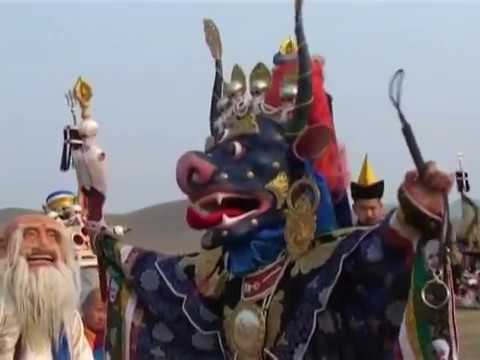







The Shailendra Dynasty , that arose in Java during the 8th century, was undoubtedly, the progenitor and a most powerful propagator of Mahayana Buddhism. Today the ruins of such great temples and monuments as Borobudur, that they had built prolifically across central Java, are testimony to this.
This thalassocratic dynasty appears to have been the ruling family of both the Medang Kingdom of Central Java and the Srivijaya Kingdom in Sumatra, at various points in history. Among the notable kings who had an impact on the prolific growth and spread of Buddhism and the building of Buddhist temples and monuments were Rakai Panangkaran – 760 – 775 CE (who had built the Kalasan Temple, Sari Temple and Lumbung Temple), King Dharanindra – 775 – 800 CE ( who had built the Sewu Temple, which is also known as Manjushrigrha [the House of Manjushri], Samaratungga, the supreme leader of the Srivijaya and Medang Kingdoms – 812 – 833 CE (who had witnessed the completion of the magnificent Buddhist temple, Borobudur) and Pramodhawardhani and Rakai Pikatan – 840s – 856 CE – who had actively built both Hindu and Buddhist temples within close proximity to each other( the Hindu Prambanan Temple, the Buddhist Plaosan Temple and the Buddhist Sajiwan Temple were all constructed during this era, which suggests that during their reign, Hindu and Buddhist faiths were in harmony).
There was also Balaputradewa – 860 – (who had sponsored the building of the Nalenda Monastic University in India!).
Shailendra Dynasty was the name of an influential Indonesian dynasty that emerged in 8th-century Java. Shailendras were active influencer of Mahayana Buddhism whose reign signified a cultural renaissance in the region. The glorious Buddhist monuments was then built across the fertile volcanic plain named as Kedu Plain .
The most incredible of them all was the massive stupa of Borobudur which is a very popular pilgrimage site for locals, tourist and Buddhist practitioners. It is now a UNESCO World Heritage Site. Wow ….incredible it took more than 50 years to complete this architectural monument . Read and heard about this amazing monuments and all the beautiful stone inscriptions there. I have not been there before but wish to in the near future. Interesting read of all about this historical information on the Shailendra Dynasty.
Thank you Rinpoche for this sharing.
Wow!….this is a very long history but a very interesting one about Shailendra kingdom propagated Mahayana Buddhism. Another great topic to look forward to on blog chat. Thank you Rinpoche and blog team for this wonderful write up!????