
Question asked by Tom
In some translations/transliterations of the Heart Sutra, the mantra at the end is either written "TADYATHA GATE GATE PARAGATE PARASAMGATE BODHI SOHA or written as "TADYATHA: (OM) GATE GATE PARAGATE PARASAMGATE BODHI SOHA. My question is why is "Om" omitted or added to the mantra? Is there a reason behind this, and would it apply that reasoning to other sutra mantras like the one from the 29 chapter version of the Golden light sutra? NAMO RATNA TRAYAYA TADYATHA/ KUTI KUTINI/ IMIRITO/ KOSHANI IMIRINI IRI SVAHA? Would it be incorrect to add Om into that mantra?






































Dear Tom,
Thank you for your questions. Within Tibetan Buddhism you will find many mantras that begin with the syllable ‘om’ or that is it very close to the beginning and end with the syllables ‘soha’. This has to do with their particular meaning.
The syllable ‘om’ is an invocation to the Buddhas and their sacred energies into our lives, whereas ‘soha’ is a word that can mean ‘grant me’. Therefore, mantras can be seen as an invocation to the divine beings to bring a particular quality into one’s life. That is why mantras have different benefits. In and of themselves mantras invoke the entire energies of the divine beings, but have a particular quality that they can impart to the practitioner at a quicker speed. For example, Manjushri’s mantra is well-known for increasing wisdom, intellect and memory, whereas Chenrezig’s mantra is well-known for developing compassion and subduing anger.
Another group of syllables found in mantras are ‘om ah hung’. These represent the holy body, speech and mind of the Buddhas that we are seeking to gain ourselves by practicing the Buddhist path. For example you can see these syllables in the mantra of Lord Tsongkhapa: “Om Ah Guru Benza Dhara Sumati Kirti Siddhi Hung Hung”. In some mantras the ‘hung’ syllable can be repeated twice. Other mantras that do not start in this way or include these syllables have their own unique meanings.
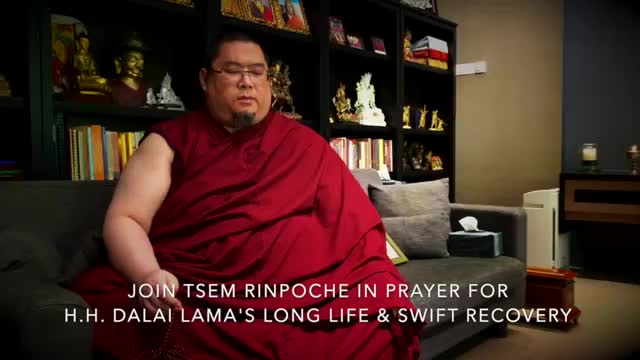
As for your question regarding the omission of the ‘om’ syllable sometimes in translations of the Heart Sutra, this actually depends on the tradition and how it was transmitted down. There is some variation between lineages. In Kechara we follow the lineage as transmitted by His Eminence the 25th Tsem Rinpoche, which definitely includes the syllable.
As for adding the syllable ‘om’ to any mantras, this is not necessary. For example the long Manjushri mantra does not start with an ‘om’. In fact it is not advisable to add syllables into mantras because the power of a mantra flows through the lineage of masters who taught the mantra, all the way back to the source – the enlightened beings. Therefore we should practice the mantras as taught to us and transmitted to us by our gurus. This is because of the blessings of the mantras flow through the unbroken lineage back to the Buddhas.
Tsem Rinpoche has an excellent teaching titled “All about Mantras” which you can find here: https://www.youtube.com/watch?v=G2hFuMhh658. I hope this helps.
Thank you.